Whew! Here are my notes from day 2 of Q:
Q Day 2 (It Rhymes)
We started this morning with a few songs from Sandra
McCracken. She has a pure voice, a sweet spirit and I really enjoyed hearing
from her. Glad Q brought her in.
Prayer from Gabe Lyons.
And now…
Miroslav Volf: Demonstrating a Public Faith
Author and founding director of the Yale Center for
Faith and Culture
Ha ha. Awesome accent. He
started by saying "Vhat a wenue." I know, lame thing to notice with
someone as intelligent and respected as Volf, but welcome to my brain this
morning.
Faith is not going away;
faiths in the world particularly Islam, Christianity ad Buddhism are growing.
The world is becoming more and more religious place. People of faith have found
thmelseves interested in faith that shapes the community and public life of a
nation, partly influenced by the spread of the democratic ideal.
People of different religious
backgrounds all want to shape the same space according to their different ideas
of the world. We are "living under the same roof." We no longer
sequester people into particular nations. Tall fences are gone. Fences are
gone, period, and we live, many of us, under the same roof which introduces
challenges for how we must live our public lives.
Authoritarianism which wants
to dominate the public space. On the opposite side, secular exclusivism (the
thought that the best account of how to live peacefully is to secularize).
Neither religious
totalitarianism/authoritarianism nor secular exclusivism will work. To work
within a single polity will generate conflict.
We must give up on the idea
of "Christian America" or "Muslim Egypt" or "secular
Europe" we need a pluralistic approach giving equal voice to all religious
backgrounds.
We need a Christian
foundation. Is there such a thing as a Christian foundation for a pluralistic
society? Of course Volf thinks yes.
Where does pluralism as a
political project have its origin. Thomas Helmus (?), Baptist on the run to
Amsterdam. Believed all religious people (including atheists) should have
exactly the same freedoms, BECAUSE OF his Christian beliefs. He wasn't
concerned only for his own religious freedom, but for all people. So there is
historical precedent (also mentioned the Mayflower, etc)
John Locke: Christian reasons
for toleration. "There should be freedom in the way in which people come
to faith for it concerns the deepest concerns of our lives" and concerns
our heart/soul and must be allowed to be free in coming to God/faith. Love
should qualify the way in which faith is lived in the world. Love grants to others
what they want granted for themselves.
What is often brought against
pluralism is the fact of distinct groups and beliefs and how can they live
together? "We are Christian on account of our differences from
others." Our identity is wrapped up in our difference from others.
Christianity is not only
about differences, but about things that are in common with others. The jacket
I am wearing is not specifically Christian or not Christian.
Jesus says, "I am the
truth" but it's the same Jesus who says he is the one who enlightens
everyone. Specific Christian beliefs are
reflected in the beliefs of other world systems. All truth is God's truth. (But
we don't have to give up the specificities of our faith)
"We fear each other but
have lost the fear of God." We build mosques not to worship God but to
mark our territory. Like a cross in Croatia put up to cow the Bosnian Muslims
and remind them Croatia has the high ground.
Christ died so that all
people can find God and embrace him.
Interview with Barbara Bradley Haggerty hosted by
Michael Cromartie: Future of Media and Faith
Haggerty is a religion correspondent with NPR
MC: How do you decide which
topics to cover?
News dictates this to a good
degree. Catholicism keeps her busy. J
Other times, on small news days she can drill down on things like the atheist
movement or the rap "Why I love Jesus but hate religion"… how do
young people absorb theology and is there danger in "YouTube
theologians"? Or the "controversy" over Adam and Eve… is it
scientifically impossible to come down to two ancestors?
Her book is
"Fingerprints of God"
MC: How do you handle
controversial issues?


 . The idea behind this Bible was to remove all the commentary, footnotes and chapter breaks and read the scriptures without all the distraction, keeping the emphasis on the text rather than all the centuries of commentary that have grown up around it. I love this. I spent a good amount of time on the plane ride home reading from the book of Luke, which read a LOT more like a fun book that didn't require that I stop after a chapter of dutiful reading.
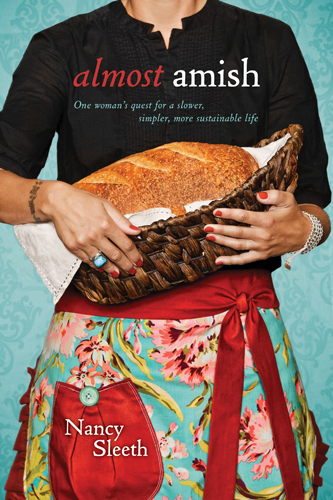
 by Nancy Sleeth. Nancy spoke at Q, and in this book she looks at the Amish lifestyle to see if there's anything we might want to take advantage of in our own lives. I haven't read the book yet, but I enjoyed the presentation and I'm sure I'll check it out. Also... it's published by my friends at Tyndale, in case you care about such things.
 . Kuyper talks about the Christian duty to engage in public life, not just the Church, because of God's sovereign control over every aspect of life. As he
 by Jonathan Merritt hasn't been officially released yet, but that didn't stop it from being in our goody bag. Merritt suggests we can find a way to engage in culture and politics without jumping in on the culture wars or snagging power for ourselves. Should be an interesting read.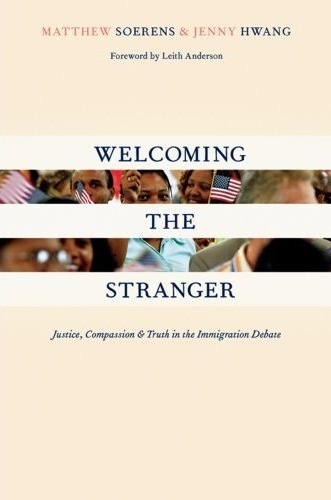
 by Jim Ball. I assume the name says it all. I guess I'll flip through this one and see if I want to read it carefully.
 by Matthew Soerens and Jenny Hwang. Jenny did a great presentation at Q about immigration (legal and otherwise) and I spent a good amount of time with her and a few others yesterday morning, running around D.C. and meeting with various officials who are heavily involved in this issue. I'll write more about that soon (probably next week). But in the meantime, I wanted to read Jenny's book, so I bought it.


 Over 140 people have given


 !
!



 , and I'm excited for this new phase in the book's life.