Catalyst Church in Ipswich, Australia is doing a multi-week series loosely based around My Imaginary Jesus. The pastor kindly sent me the link to their first service in the series. There's a fun play at the front end, followed by the pastor's message, which may sound familiar to some of you (he used some material from the intro talk I do on this topic, which I thought was fun and cool!).

Showing posts with label my imaginary jesus. Show all posts
Showing posts with label my imaginary jesus. Show all posts
Tuesday, March 26, 2013


Friday, March 22, 2013
My "must read" list (fiction)
I recently wrote an article about one of my favorite contemporary novelists, Gene Wolfe, at the Speculative Faith blog. This spun out into one of my friends, Becky, saying that she didn't think there should be a "must read" list of books, and then DM Dutcher responding to that and Becky responding to that, which brought me finally to writing this post. While I don't think there's such a thing as a "must read" list, there are certain authors who have changed the way I look at the world, showed me what's possible in fiction and inspired me to do better work. I thought it would be fun to share some of those, why they are important to me, and invite you to check out the ones that interest you.
These aren't in any specific order. Looking forward to your thoughts.
 Gene Wolfe's Book of the New Sun (now packaged as Shadow and Claw and Sword and Citadel
 ). If you click on the first link in this post, you'll get a whole article about Wolfe. I read the Book of the New Sun and loved it. It's a beautiful science fantasy about a young torturer who grows up to (possibly?) be the savior of the world in the far future. Wolfe writes highly literate, complicated, baroque fiction with clear, profound Christian underpinnings. His work can be read over and over, and his short stories are often genius. I've read nearly everything the guy has written and here's the main thing I've learned from Wolfe: there's no such thing as a secular bias against Christian work, or if there is, it can be overcome and, in fact, smashed to bits by making compelling art.
 John Steinbeck's East of Eden
 . My wife suggested I read this, and I completely balked. For one, it had a made-for-TV cover on it, and, secondly, I associated Steinbeck with Faulkner (who I do not enjoy). But this book is amazing. It's the multi-generational saga of two branches of one family... one representing Cain and the other Abel and wrestling with this question: Has God commanded us to overcome sin? Or assured us it can be done? Or told us that sin must win out in the end despite our attempts to the contrary. It's a book about being human, and it's beautiful. I re-read it every 20 months or so, and I enjoy it more each time. The main thing I learned from East of Eden: the story of humanity is compelling, and when explored honestly it sheds light not only on who we are, but who we could be.
 Glen David Gold's Carter Beats the Devil
 . I don't recall how I came across this book, but it's absolutely delightful. Part historical, part romance, part comedy, part tragedy, but all gorgeously written with a light, deft hand. The plot moves along, it's clearly written and it's emotionally evocative. It hits all the right notes, in other words, and reflects the human experience with humor and pathos while also being about a magician and his lady love and his pet lion. Gold taught me that a book could be light in tone and profound in meaning... that literature need not choose between high and low brow. And it just made me grin a lot throughout.
Kurt Vonnegut. I won't list just one of his books, as it's more Vonnegut's books as a whole that changed something in me. I read and enjoyed Slaughterhouse-Five (his most famous book), a humorous satire about the Allies killing innocent civilians in World War 2. Yeah, you read that right. But probably my favorite book of his is Cat's Cradle
 , a book that takes swipes at government, religion and war in a spectacularly hilarious way. It invents its own religion and has a nearly-nameless protagonist who finds love, religion and political influence mostly by blundering into them. Vonnegut taught me that satire can and should be funny, and that when your reader is laughing you can slip the knife in their gut and they don't really mind. This insight has come in handy in my own writing career when I wrote My Imaginary Jesus
 .
.
 Percival Everett's Big Picture
 . Percival Everett gets under my skin. Every book he writes I either love or hate. There's no middle ground. One of the ones I love is Big Picture. It's a collection of short stories that weave together in unexpected ways, that I'm not even sure were written to weave together and yet they do. It's haunting and draws a portrait of human beings that is rich, keenly observed and almost painful at times. If you read Big Picture and like it (I think you will), I'll give you the list of my favorite Everett books (of which there are plenty). Percival was one of my professors at UC Riverside once upon a time, and he taught me plenty in the classroom as well as on the page. One thing I've learned from his work: you don't have to go searching for comedy, there's plenty already out there in the midst of this messed up world. You just have to keep your eyes open and write what you see. Big Picture is, apparently, out of print, so you'll have to buy it used.
 C.S. Lewis's Till We Have Faces
 . It's a requirement as a Bible believin' Eeeeeevanjelicul that I love C.S. Lews. And I do. I love him a lot. I first read the Narnia books when I was about seven and since then I've read everything the man has written, down to the fragments of novels and half-written short stories. When it comes to his fiction, I have three favorites. Till We Have Faces, The Great Divorce
  and Perelandra
 . I still like the Narnia books (especially The Last Battle
 ... and my own Sword of Six Worlds
 is unquestionably influenced by him), but Till We Have Faces is far and away my most beloved. Maybe because it's the only time that he adapted an actual myth (Psyche and Cupid), or maybe because it's the most intensely emotional fiction he wrote, but it's one I enjoy without reservation, and that shows God clearly, without ever talking about God. I learned in this book that it's okay (even admirable) for Christian books to wrestle with the hardest questions in the faith, to do it honestly and not to shy away from the most difficult conclusions and that then, like in life, those questions can lead the reader toward truth.
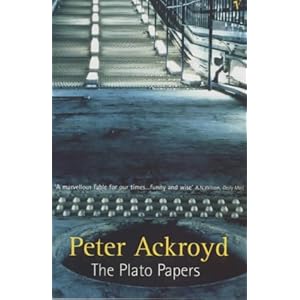
 Peter Ackroyd's The Plato Papers
 . This strange, slight little book brings me immense pleasure. It's a satire of the 20th century's philosophies, science and historical methods, all set 17 centuries in our future, as our descendants try to make sense of the strange little world they uncover beneath modern London. The main character, Plato, holds lectures where he explains and lauds 20th century culture, with wonderful lectures that involve things like explaining how the ancient novelist and humorist Charles D had many interesting works, the most hilarious of which was "The Origin of the Species." It's also a retelling of the ancient Grecian Plato's life in some sense, which brings a complexity and feeling of familiarity to a very strange world. I've read this maybe ten times and it makes me laugh each time. This book taught me that strange doesn't mean inaccessible, and that sometimes an author can write about his deepest, most personal interests without thinking too much of his audience, and they will not only understand it, but enjoy it. Having that knowledge in the back of my head, of course, made it a little easier to feel that I could write Night of the Living Dead Christian
 and that, despite the zombies, werewolves and vampires, people could still enjoy the comedy and spiritual teachings in it.
 G.K. Chesterton's The Napoleon of Notting Hill
 . Chesterton is another favorite who, in general, I like pretty much everything the man wrote. I came to him through C.S. Lewis, directly to The Man Who Was Thursday. The Father Brown mysteries are particular favorites, but when I read The Napoleon of Notting Hill I saw something amazing. It starts as a slapstick comedy set in a not-too-distant future where the King of England is chosen by a lottery system and it just happens to fall to a man who is more jester than king. He takes it upon himself to make fun of everyone by creating an invented history, complete with costumes and theme songs and flags, for every neighborhood in London, and much of the humor of the novel comes from the wacky things he does in this process. Then, suddenly, halfway through the book, a shift takes place and the book moves into a deadly serious, almost Shakespearean war book. One of the characters who has been seen, mostly, as the butt of the King's jokes becomes the hero of the novel, and what seemed like a slight diversion of a slightly satirical novel becomes a serious reflection on war and remembrance and what makes things holy. It's an amazing feat, and surprisingly rare in modern literature. This marriage of comedy and tragedy taught me that the walls of genre and categorization are thinner than we think, and can be manipulated deftly to avoid the reader feeling cheated, and simultaneously providing an experience that couldn't be achieved in one genre alone.
 Frederick Buechner's Son of Laughter. I haven't read all of Buechner's books yet, but I'm working my way through. Each book is a sumptuous meal, and should be enjoyed slowly, relishing each page. He's a marvelous writer, describes action subtly and can put pieces in place that look like set decorations but are actually accumulating to an emotional payoff later in the story, for the characters as well as the reader. Son of Laughter is a book about the Biblical Jacob, son of Isaac, and it tells the story of Jacob and, to a lesser extent, his father and grandfather in a powerful and almost cinematic way. There were moments when I would think, "This part isn't in the Bible" and would go look it up and it was. He brings things to life that powerfully... seemingly unimportant comments in scripture would turn out to be of central importance to the people living the tales. Buechner teaches me that it's okay to breathe life and detail into the Bible, because that life and detail are already there for the watchful eye to uncover, and a fictional account can be more compelling than a hundred commentaries if done well.
 FLANNERY O'CONNOR FOREVER! The Complete Stories
 is everything you need. It's not an exaggeration that I Love Flannery. I tried to convince my wife to name our last child Flannery, which was quickly vetoed. Her novels are amazing. Her stories are inescapably brilliant. I honestly think that "A Good Man Is Hard to Find" is one of the best short stories in the English language. "Parker's Back" is, bar none, the best example of the mystical experience of Christ being rejected by the religious Christian that I've seen anywhere outside of real life. When I read Flannery's work I feel like an apprentice painter standing next to Michelangelo. She's unflinching in her portrayal of the real world, unreservedly Christian and a professional artist to the point of absolute perfection in her work. I don't know that I can list one thing I've learned from her without it being a disservice to how monumental she is, but I will give it a try. Flannery O'Connor taught me that the job of the Christian artist is to look at the world without flinching, and to present it as honestly as possible. She believes (and this is clear in her work) that even the most grotesque things in this world point us toward Christ.
Necessarily, in making a list like this, most books sprang to mind as I wrote. What about Lord of the Flies! Watership Down! The Brothers Karamazov (the greatest Christian novel of all time)! And yes, these are all great books, but I have to stop somewhere. And while the first two impacted me enormously, the books on this list did more so. And the Brothers Karamazov is still working on me... I'm not sure what the end result will be, it's still in process.
What do you think? Have you read any of these? What did you think? WHAT'S ON YOUR MUST READ LIST? I'd love to find some new books to explore at your recommendation.
These aren't in any specific order. Looking forward to your thoughts.
 ). If you click on the first link in this post, you'll get a whole article about Wolfe. I read the Book of the New Sun and loved it. It's a beautiful science fantasy about a young torturer who grows up to (possibly?) be the savior of the world in the far future. Wolfe writes highly literate, complicated, baroque fiction with clear, profound Christian underpinnings. His work can be read over and over, and his short stories are often genius. I've read nearly everything the guy has written and here's the main thing I've learned from Wolfe: there's no such thing as a secular bias against Christian work, or if there is, it can be overcome and, in fact, smashed to bits by making compelling art.
 . My wife suggested I read this, and I completely balked. For one, it had a made-for-TV cover on it, and, secondly, I associated Steinbeck with Faulkner (who I do not enjoy). But this book is amazing. It's the multi-generational saga of two branches of one family... one representing Cain and the other Abel and wrestling with this question: Has God commanded us to overcome sin? Or assured us it can be done? Or told us that sin must win out in the end despite our attempts to the contrary. It's a book about being human, and it's beautiful. I re-read it every 20 months or so, and I enjoy it more each time. The main thing I learned from East of Eden: the story of humanity is compelling, and when explored honestly it sheds light not only on who we are, but who we could be.. I don't recall how I came across this book, but it's absolutely delightful. Part historical, part romance, part comedy, part tragedy, but all gorgeously written with a light, deft hand. The plot moves along, it's clearly written and it's emotionally evocative. It hits all the right notes, in other words, and reflects the human experience with humor and pathos while also being about a magician and his lady love and his pet lion. Gold taught me that a book could be light in tone and profound in meaning... that literature need not choose between high and low brow. And it just made me grin a lot throughout.
Kurt Vonnegut. I won't list just one of his books, as it's more Vonnegut's books as a whole that changed something in me. I read and enjoyed Slaughterhouse-Five
(his most famous book), a humorous satire about the Allies killing innocent civilians in World War 2. Yeah, you read that right. But probably my favorite book of his is Cat's Cradle, a book that takes swipes at government, religion and war in a spectacularly hilarious way. It invents its own religion and has a nearly-nameless protagonist who finds love, religion and political influence mostly by blundering into them. Vonnegut taught me that satire can and should be funny, and that when your reader is laughing you can slip the knife in their gut and they don't really mind. This insight has come in handy in my own writing career when I wrote My Imaginary Jesus.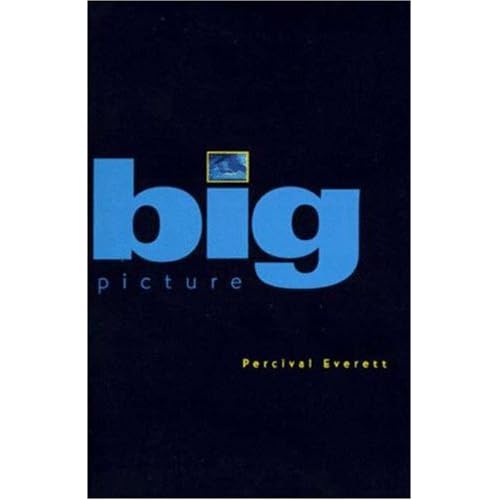 . Percival Everett gets under my skin. Every book he writes I either love or hate. There's no middle ground. One of the ones I love is Big Picture. It's a collection of short stories that weave together in unexpected ways, that I'm not even sure were written to weave together and yet they do. It's haunting and draws a portrait of human beings that is rich, keenly observed and almost painful at times. If you read Big Picture and like it (I think you will), I'll give you the list of my favorite Everett books (of which there are plenty). Percival was one of my professors at UC Riverside once upon a time, and he taught me plenty in the classroom as well as on the page. One thing I've learned from his work: you don't have to go searching for comedy, there's plenty already out there in the midst of this messed up world. You just have to keep your eyes open and write what you see. Big Picture is, apparently, out of print, so you'll have to buy it used.
 . It's a requirement as a Bible believin' Eeeeeevanjelicul that I love C.S. Lews. And I do. I love him a lot. I first read the Narnia books when I was about seven and since then I've read everything the man has written, down to the fragments of novels and half-written short stories. When it comes to his fiction, I have three favorites. Till We Have Faces, The Great Divorce and Perelandra. I still like the Narnia books (especially The Last Battle... and my own Sword of Six Worlds is unquestionably influenced by him), but Till We Have Faces is far and away my most beloved. Maybe because it's the only time that he adapted an actual myth (Psyche and Cupid), or maybe because it's the most intensely emotional fiction he wrote, but it's one I enjoy without reservation, and that shows God clearly, without ever talking about God. I learned in this book that it's okay (even admirable) for Christian books to wrestle with the hardest questions in the faith, to do it honestly and not to shy away from the most difficult conclusions and that then, like in life, those questions can lead the reader toward truth.
 . This strange, slight little book brings me immense pleasure. It's a satire of the 20th century's philosophies, science and historical methods, all set 17 centuries in our future, as our descendants try to make sense of the strange little world they uncover beneath modern London. The main character, Plato, holds lectures where he explains and lauds 20th century culture, with wonderful lectures that involve things like explaining how the ancient novelist and humorist Charles D had many interesting works, the most hilarious of which was "The Origin of the Species." It's also a retelling of the ancient Grecian Plato's life in some sense, which brings a complexity and feeling of familiarity to a very strange world. I've read this maybe ten times and it makes me laugh each time. This book taught me that strange doesn't mean inaccessible, and that sometimes an author can write about his deepest, most personal interests without thinking too much of his audience, and they will not only understand it, but enjoy it. Having that knowledge in the back of my head, of course, made it a little easier to feel that I could write Night of the Living Dead Christian and that, despite the zombies, werewolves and vampires, people could still enjoy the comedy and spiritual teachings in it.
 . Chesterton is another favorite who, in general, I like pretty much everything the man wrote. I came to him through C.S. Lewis, directly to The Man Who Was Thursday. The Father Brown mysteries are particular favorites, but when I read The Napoleon of Notting Hill I saw something amazing. It starts as a slapstick comedy set in a not-too-distant future where the King of England is chosen by a lottery system and it just happens to fall to a man who is more jester than king. He takes it upon himself to make fun of everyone by creating an invented history, complete with costumes and theme songs and flags, for every neighborhood in London, and much of the humor of the novel comes from the wacky things he does in this process. Then, suddenly, halfway through the book, a shift takes place and the book moves into a deadly serious, almost Shakespearean war book. One of the characters who has been seen, mostly, as the butt of the King's jokes becomes the hero of the novel, and what seemed like a slight diversion of a slightly satirical novel becomes a serious reflection on war and remembrance and what makes things holy. It's an amazing feat, and surprisingly rare in modern literature. This marriage of comedy and tragedy taught me that the walls of genre and categorization are thinner than we think, and can be manipulated deftly to avoid the reader feeling cheated, and simultaneously providing an experience that couldn't be achieved in one genre alone.
 is everything you need. It's not an exaggeration that I Love Flannery. I tried to convince my wife to name our last child Flannery, which was quickly vetoed. Her novels are amazing. Her stories are inescapably brilliant. I honestly think that "A Good Man Is Hard to Find" is one of the best short stories in the English language. "Parker's Back" is, bar none, the best example of the mystical experience of Christ being rejected by the religious Christian that I've seen anywhere outside of real life. When I read Flannery's work I feel like an apprentice painter standing next to Michelangelo. She's unflinching in her portrayal of the real world, unreservedly Christian and a professional artist to the point of absolute perfection in her work. I don't know that I can list one thing I've learned from her without it being a disservice to how monumental she is, but I will give it a try. Flannery O'Connor taught me that the job of the Christian artist is to look at the world without flinching, and to present it as honestly as possible. She believes (and this is clear in her work) that even the most grotesque things in this world point us toward Christ.
Necessarily, in making a list like this, most books sprang to mind as I wrote. What about Lord of the Flies! Watership Down! The Brothers Karamazov
(the greatest Christian novel of all time)! And yes, these are all great books, but I have to stop somewhere. And while the first two impacted me enormously, the books on this list did more so. And the Brothers Karamazov is still working on me... I'm not sure what the end result will be, it's still in process.Monday, March 11, 2013
Here's my interview on the "Off the Shelf" Podcast
Last week Paul Turner from the Off the Shelf podcast interviewed me about "My Imaginary Jesus: The Spiritual Adventures of One Man Searching for the Real God."
A fun time! Thanks, Paul!
."A fun time! Thanks, Paul!
Tuesday, November 20, 2012
Some pictures from the Imaginary Jesus stage play
I have a lot to say about this last week and all the amazing things that happened while I was in St. Louis for the Imaginary Jesus stage play. I'll need some time to process and write it all up. In the meantime, here are some pictures from the play, which opened to sold out crowds last weekend!
The show will go on the next two weekends, so if you're anywhere near St. Louis grab your tickets and get over there!

The show will go on the next two weekends, so if you're anywhere near St. Louis grab your tickets and get over there!

 |
| Matt is split in two during the play: Matt the character on the left, Matt the Narrator on the right. |
 |
| Daisy the donkey is not amused by Matt and Matt making fun of her. |
 |
| Here's Krista and Matt together. |
 |
| Shane the atheist, Portland Jesus and the Matts enjoy some fancy dessert at the Pix Patisserie. |
Thursday, July 19, 2012
Imaginary Jesus Stage Play coming this fall!

Friday, April 06, 2012
Imaginary Jesus... THE STAGE PLAY!
This November will be the world premiere of the stage adaptation of Imaginary Jesus!
The adaptation was written by the award winning playwright, Deanna Jent, whose play "Falling" is also opening off-Broadway this fall.
The play will be premiering at the Mustard Seed Theatre in St. Louis. I'll keep you updated on details, but right now it looks like Krista and I will be flying out for the premiere. I can't miss the opportunity to see an actor playing the part of me while I am sitting in the audience.
I've read the first 75% of the script and I couldn't be more pleased. It's clever, true to the source material and adds a few new, enjoyable bits as well. I laughed out loud while I was reading it, and I can't wait to see it live! If you live in the St. Louis area, I hope you'll be there, too!
If you're not in the St. Louis area... well, Deanna will make the play available to theatre companies in other cities, so who knows? You might get a chance to see it, too.
!The adaptation was written by the award winning playwright, Deanna Jent, whose play "Falling" is also opening off-Broadway this fall.
The play will be premiering at the Mustard Seed Theatre in St. Louis. I'll keep you updated on details, but right now it looks like Krista and I will be flying out for the premiere. I can't miss the opportunity to see an actor playing the part of me while I am sitting in the audience.
I've read the first 75% of the script and I couldn't be more pleased. It's clever, true to the source material and adds a few new, enjoyable bits as well. I laughed out loud while I was reading it, and I can't wait to see it live! If you live in the St. Louis area, I hope you'll be there, too!
If you're not in the St. Louis area... well, Deanna will make the play available to theatre companies in other cities, so who knows? You might get a chance to see it, too.
Sunday, April 01, 2012
Happy Birthday, Imaginary Jesus!
Two years ago this month, Imaginary Jesus was officially released upon the world!

And there was much rejoicing!
At least at my house, where I took tons of copies of the book and placed them on my bookshelf together with other books I love. Like so:

The Imaginary Jesus audio book came out a little earlier than the physical books, which I had the pleasure of narrating. There's a certain line (uttered by King James Jesus) which I had practiced shouting aloud in my car for weeks.
Overall, I have to say that the whole process has been amazing. Getting interviewed by Writer's Digest was a dream come true, and getting a review from Publisher's Weekly and Relevant Magazine was cool. I wouldn't want all of my dreams to come true, of course, but that was a good one. My author website launched around then, too, and has gone through several changes in the meantime.
 Of course, Imaginary Jesus has been recently re-released as My Imaginary Jesus
 , and I'm excited for this new phase in the book's life.
If you haven't bought a copy of my first novel yet, now would be a great time. It's a great gift for Easter, too! Read the first chapter here.
This month, in honor of the anniversary of the book, I'm planning a few fun surprises. So stay tuned! Or, feel free to leave your suggestions for fun surprises for the month in the comments section.

And there was much rejoicing!
At least at my house, where I took tons of copies of the book and placed them on my bookshelf together with other books I love. Like so:

The Imaginary Jesus audio book came out a little earlier than the physical books, which I had the pleasure of narrating. There's a certain line (uttered by King James Jesus) which I had practiced shouting aloud in my car for weeks.
Overall, I have to say that the whole process has been amazing. Getting interviewed by Writer's Digest was a dream come true, and getting a review from Publisher's Weekly and Relevant Magazine was cool. I wouldn't want all of my dreams to come true, of course, but that was a good one. My author website launched around then, too, and has gone through several changes in the meantime.
 , and I'm excited for this new phase in the book's life.
If you haven't bought a copy of my first novel yet, now would be a great time. It's a great gift for Easter, too! Read the first chapter here.
This month, in honor of the anniversary of the book, I'm planning a few fun surprises. So stay tuned! Or, feel free to leave your suggestions for fun surprises for the month in the comments section.
Monday, February 13, 2012
IMAGINARY JESUS NO MORE!
Saying goodbye can be so difficult....
Back in April of 2010 my first book, Imaginary Jesus, hit the bookstores. It's hard to express how cool that was, and how much I love this book... it's sort of like (in a less significant way) having a kid. I'm proud of this book, even if it never grows up and graduates college and, say, earns me an honorary doctorate. And I'm enormously happy that this book found a publisher and has so many fans.
I love the cover, which has the perfect blend of humor and slapstick graffiti, with the defacing of this poor Aloha-shirted man to make him look like Jesus. I love the design. Some great authors and reviewers said a lot of amazing things about this book (some of them like the book more than I do!).

One of the challenges with the book, however, has been getting it into the right people's hands. We discovered soon after the book came out that a lot of people -- particularly Christian readers -- were a little intimidated by the title and cover. We got questions pretty often from people about whether the book is saying that Jesus is imaginary (Ummm... no. It is, after all, published by Tyndale House, a respected Christian publishing house). It seems that the majority of people who read the book love it, but let's face it, if you're browsing the Christian fiction section of the bookstore, you are probably looking for a thriller or a romance.

I'm not sure that standing next to an Amish romance and a Christian thriller has put Imaginary Jesus into lots of people's shopping carts (yes, I realize that most of you don't use shopping carts at the bookstore but I really like books).
All that to say, some people looked at the book and thought, well, maybe it was too big a risk (I assure you it isn't). Maybe it was disrespectful (it's not). Maybe it's making fun of God (NO WAY! Do you think I'm dumb or sumpthin?).
So. My beloved publisher approached me and said, "You know, let's try again. Your book isn't getting to as many people as we would like. Let's give it another shot. Sort of like how they are completely re-launching the Spider-Man movies." Technically, they did not mention Spider-Man. Of course I was up for that. Here are some of the NEW AND IMPROVED bits you'll notice in the re-release.
One, a new cover:

As you can see, the new cover is designed to reflect the cover from Night of the Living Dead Christian, which should make these books look lovely on the shelf together.

Two, a new, more possessive title: My Imaginary Jesus. This should help clarify that the book is not saying that "Jesus is imaginary" but rather "we all have some misconceptions about who Jesus is." Likewise the new tagline, "The spiritual adventures of one man searching for the real God" should make it clear that the book endorses belief in God.
Third, an introduction by David Kinnaman, author of You Lost Me, unChristian and president of the Barna Group. I just recently read the intro, and it's a lot of fun. I think you'll like it. This should set some minds at ease, too. David is a trusted voice in much of the Christian community and he likes numbers and stuff, which shows that he is smart and a voice of reason.
We've also added in a small group discussion guide (something that I get asked about with astonishing regularity) as well as QR codes that will allow you to be guided through the discussions by YOURS TRULY in a series of videos. That's right people, QR codes. The future is now. I had to go into the computer like in Tron to make this all happen, but that's the sort of dedication I bring to the table in making the new and improved My Imaginary Jesus newer and more improveder.
All of this in an effort to help people see that this book is not only sidesplittingly hilarious, but also a book to be taken seriously... that it has some (hopefully) deep things to say about what it means to be in a relationship with a relationally present but physically absent Christ. Hopefully the new packaging and cover will make it easier for people to give it to a friend, suggest it to their pastor, get it as the church book-club book of the month and so on.
Anyway, to the details:
MY IMAGINARY JESUS releases on April 1st! This is not a joke, and there will not be a post on April first saying, HA HA, FOOLED YOU. No. It is for real.
Also, if you, like me, love the bearded graffiti edition of Imaginary Jesus (soon to be called the Collector's Edition), then now is your chance. You need to stockpile them as soon as possible, because soon the Collector's Edition run of books will be gone!
Goodbye, Collector's Edition Imaginary Jesus, with your hilarious cover and silly antics. We shall miss you! Hopefully your new and improved incarnation will bring us comfort.
Back in April of 2010 my first book, Imaginary Jesus, hit the bookstores. It's hard to express how cool that was, and how much I love this book... it's sort of like (in a less significant way) having a kid. I'm proud of this book, even if it never grows up and graduates college and, say, earns me an honorary doctorate. And I'm enormously happy that this book found a publisher and has so many fans.
I love the cover, which has the perfect blend of humor and slapstick graffiti, with the defacing of this poor Aloha-shirted man to make him look like Jesus. I love the design. Some great authors and reviewers said a lot of amazing things about this book (some of them like the book more than I do!).

One of the challenges with the book, however, has been getting it into the right people's hands. We discovered soon after the book came out that a lot of people -- particularly Christian readers -- were a little intimidated by the title and cover. We got questions pretty often from people about whether the book is saying that Jesus is imaginary (Ummm... no. It is, after all, published by Tyndale House, a respected Christian publishing house). It seems that the majority of people who read the book love it, but let's face it, if you're browsing the Christian fiction section of the bookstore, you are probably looking for a thriller or a romance.

I'm not sure that standing next to an Amish romance and a Christian thriller has put Imaginary Jesus into lots of people's shopping carts (yes, I realize that most of you don't use shopping carts at the bookstore but I really like books).
All that to say, some people looked at the book and thought, well, maybe it was too big a risk (I assure you it isn't). Maybe it was disrespectful (it's not). Maybe it's making fun of God (NO WAY! Do you think I'm dumb or sumpthin?).
So. My beloved publisher approached me and said, "You know, let's try again. Your book isn't getting to as many people as we would like. Let's give it another shot. Sort of like how they are completely re-launching the Spider-Man movies." Technically, they did not mention Spider-Man. Of course I was up for that. Here are some of the NEW AND IMPROVED bits you'll notice in the re-release.
One, a new cover:

As you can see, the new cover is designed to reflect the cover from Night of the Living Dead Christian, which should make these books look lovely on the shelf together.

Two, a new, more possessive title: My Imaginary Jesus. This should help clarify that the book is not saying that "Jesus is imaginary" but rather "we all have some misconceptions about who Jesus is." Likewise the new tagline, "The spiritual adventures of one man searching for the real God" should make it clear that the book endorses belief in God.
Third, an introduction by David Kinnaman, author of You Lost Me, unChristian
and president of the Barna Group. I just recently read the intro, and it's a lot of fun. I think you'll like it. This should set some minds at ease, too. David is a trusted voice in much of the Christian community and he likes numbers and stuff, which shows that he is smart and a voice of reason.We've also added in a small group discussion guide (something that I get asked about with astonishing regularity) as well as QR codes that will allow you to be guided through the discussions by YOURS TRULY in a series of videos. That's right people, QR codes. The future is now. I had to go into the computer like in Tron to make this all happen, but that's the sort of dedication I bring to the table in making the new and improved My Imaginary Jesus newer and more improveder.
All of this in an effort to help people see that this book is not only sidesplittingly hilarious, but also a book to be taken seriously... that it has some (hopefully) deep things to say about what it means to be in a relationship with a relationally present but physically absent Christ. Hopefully the new packaging and cover will make it easier for people to give it to a friend, suggest it to their pastor, get it as the church book-club book of the month and so on.
Anyway, to the details:
MY IMAGINARY JESUS releases on April 1st! This is not a joke, and there will not be a post on April first saying, HA HA, FOOLED YOU. No. It is for real.
Also, if you, like me, love the bearded graffiti edition of Imaginary Jesus (soon to be called the Collector's Edition), then now is your chance. You need to stockpile them as soon as possible, because soon the Collector's Edition run of books will be gone!
Goodbye, Collector's Edition Imaginary Jesus, with your hilarious cover and silly antics. We shall miss you! Hopefully your new and improved incarnation will bring us comfort.
Subscribe to:
Posts (Atom)